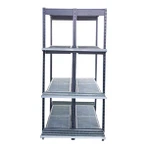
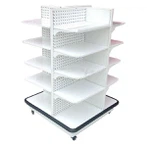
In the process of installing storage shelves, it is inevitable to need to perform welding and other work, and the quality of welding will directly affect the quality and load-bearing level of the shelves. There are five welding processes and three welding methods for shelf welding. The following issues need to be paid attention to during the welding process of the shelf.
The welding of the rack is a local rapid heating and cooling process. The welding area cannot expand and contract freely due to the constraints of the surrounding workpiece body. After cooling, welding stress and deformation will occur in the weldment. Important products need to eliminate welding stress and correct welding distortion after welding. When two steel plates with different thicknesses are butt-joined during the welding of the shelf, in order to avoid severe stress concentration caused by sharp changes in the cross section, the thicker plate edges are often gradually thinned to equal thickness at the two joint edges. The static strength and fatigue strength of butt joints are higher than other joints. For connections that work under alternating or impact loads or in low-temperature and high-pressure vessels, butt joint welding is often preferred.